
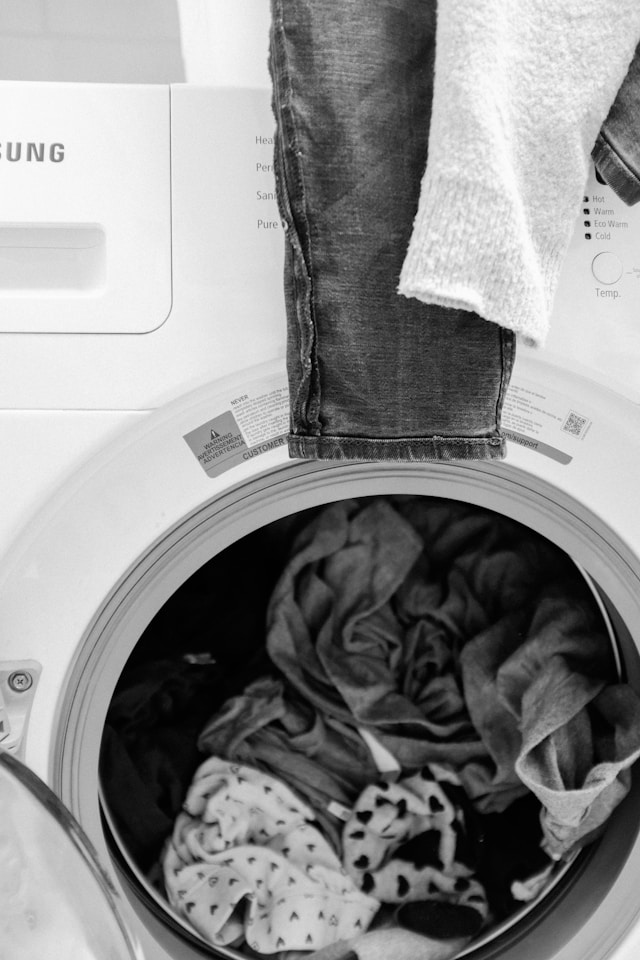
A dryer that takes two or three cycles to dry an ordinary load isn’t necessarily suffering from a weak heating element.
In many cases, the first thing to investigate is airflow.
Dryers need to move warm, moist air out of the drum. If the exhaust path is restricted, moisture remains trapped and drying times increase. The machine may continue operating while clothes remain damp.
Start with the lint filter. It should be cleaned after every load. Even a thin layer of lint can reduce airflow, and accumulated lint can become a safety concern.
Next, consider the external exhaust path. The vent hose and exterior termination should allow air to move freely. If the exterior flap barely opens while the dryer is operating, airflow may be restricted. However, homeowners should avoid dismantling complicated ductwork or climbing into unsafe locations simply to inspect it.
The symptoms can help distinguish an airflow problem from an appliance failure.
If the dryer becomes very hot but clothes remain damp, airflow deserves attention. If it produces no heat at all, the heating system may need diagnosis. A dryer that doesn’t start could have an electrical, door-switch, control, or thermal-protection issue.
Gas dryers require additional caution. A gas appliance that isn’t operating correctly should be assessed by an appropriately qualified professional rather than repeatedly restarted.
Load size also matters. Stuffing a dryer completely full prevents clothing from tumbling properly and reduces the air space needed for moisture to escape. Very small loads can create their own issues if clothing doesn’t maintain contact with the drum and airflow.
Fabric type matters too. Towels, bedding, denim, and other heavy materials naturally take longer than lightweight clothing.
If drying times have gradually increased over several months, don’t immediately buy a replacement dryer. A ventilation problem can make a perfectly functional dryer appear inefficient.
On the other hand, if airflow is good and the appliance still behaves differently, the heating element, thermostat, sensors, motor, blower, or controls may need inspection.
Cleaning the lint filter and checking accessible airflow are reasonable maintenance steps. Electrical and gas components are a different matter.
Barrie homeowners experiencing persistent dryer problems can compare their symptoms with professional dryer repair guidance before deciding whether to repair or replace the machine.
A dryer should normally provide reasonably predictable results. If a normal load suddenly requires multiple cycles, treat the change as information rather than simply accepting higher energy use.
The earlier you identify the cause, the easier it is to decide whether the solution is maintenance, ventilation work, a component repair, or eventually replacement.



